How to Choose a Sales Methodology That Fits Your SaaS Team (2026)
MEDDPICC and BANT were built for enterprise. Here's how a leader picks a sales methodology that fits a fast SaaS team, and grades any call against it in two minutes.
Carla Macciocu
Sellcrafter
If you run a SaaS team with under twenty-five reps and someone told you to roll out MEDDPICC, stop first.
That methodology was built for six-figure enterprise deals with procurement teams and a dozen stakeholders. Your deals are smaller, your cycle is shorter, you have fewer decision makers, and your buyer often has no budget line for this yet.
Adopting an enterprise framework on a non-enterprise motion is how you end up with reps gaming CRM fields or ignoring them.
This is how to choose a sales methodology that actually fits a fast non-enterprise team, and how to grade a call against it in two minutes.
What a sales methodology is for
A sales methodology is the set of principles your team sells by, and its real job is to give you something to inspect.
Without one, every rep sells their own way, some well and some badly, and you have no way to tell the difference because there is nothing to score against.
The methodology is not the sales process. The process is the stages from first contact to close. The methodology is the standard you grade each stage against.
The point of choosing one is not fashion. It is that a good one lets you diagnose a deal without a thirty-minute pipeline review.
Why the usual choices fail a non-enterprise team
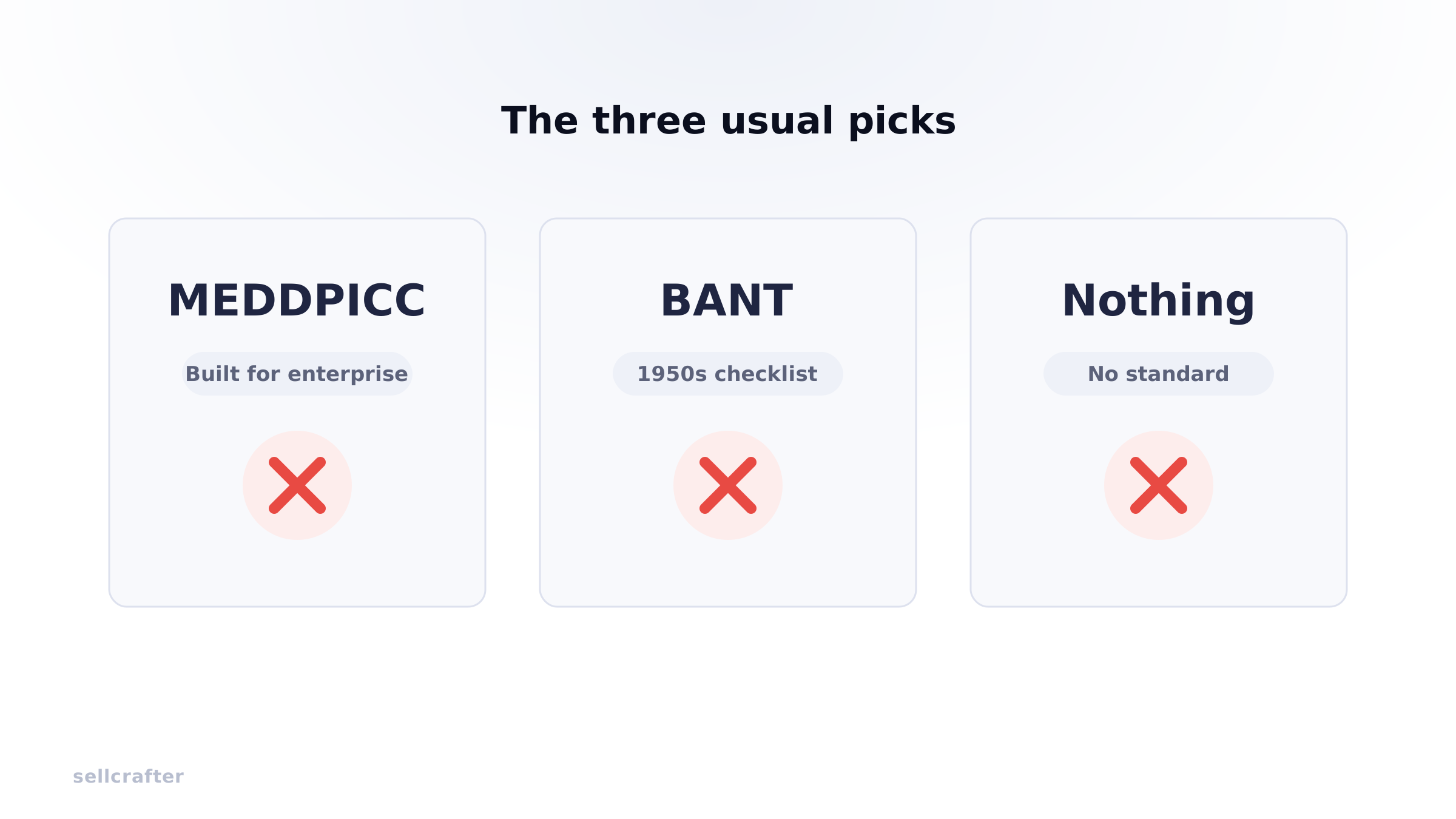
Most teams pick one of three, and all three misfire here.
MEDDPICC gets chosen because the VP Sales used it at their last company. It has eight criteria and full adoption takes three to six months.
It was designed for deals where buyer commitment already exists. On a non-enterprise motion your job is to create that commitment. Different motion, wrong tool.
BANT is the 1950s checklist: budget, authority, need, timeline. It was built for single-decision-maker license deals.
Today a deal has several people involved, and asking about budget on the first call when they have not allocated one turns your rep into an interrogator and kills trust.
The third choice is nothing at all. Every rep sells their own way and you have no scorecard, so you cannot tell a coaching problem from a process problem.
The fit for a non-enterprise motion: two scorecards
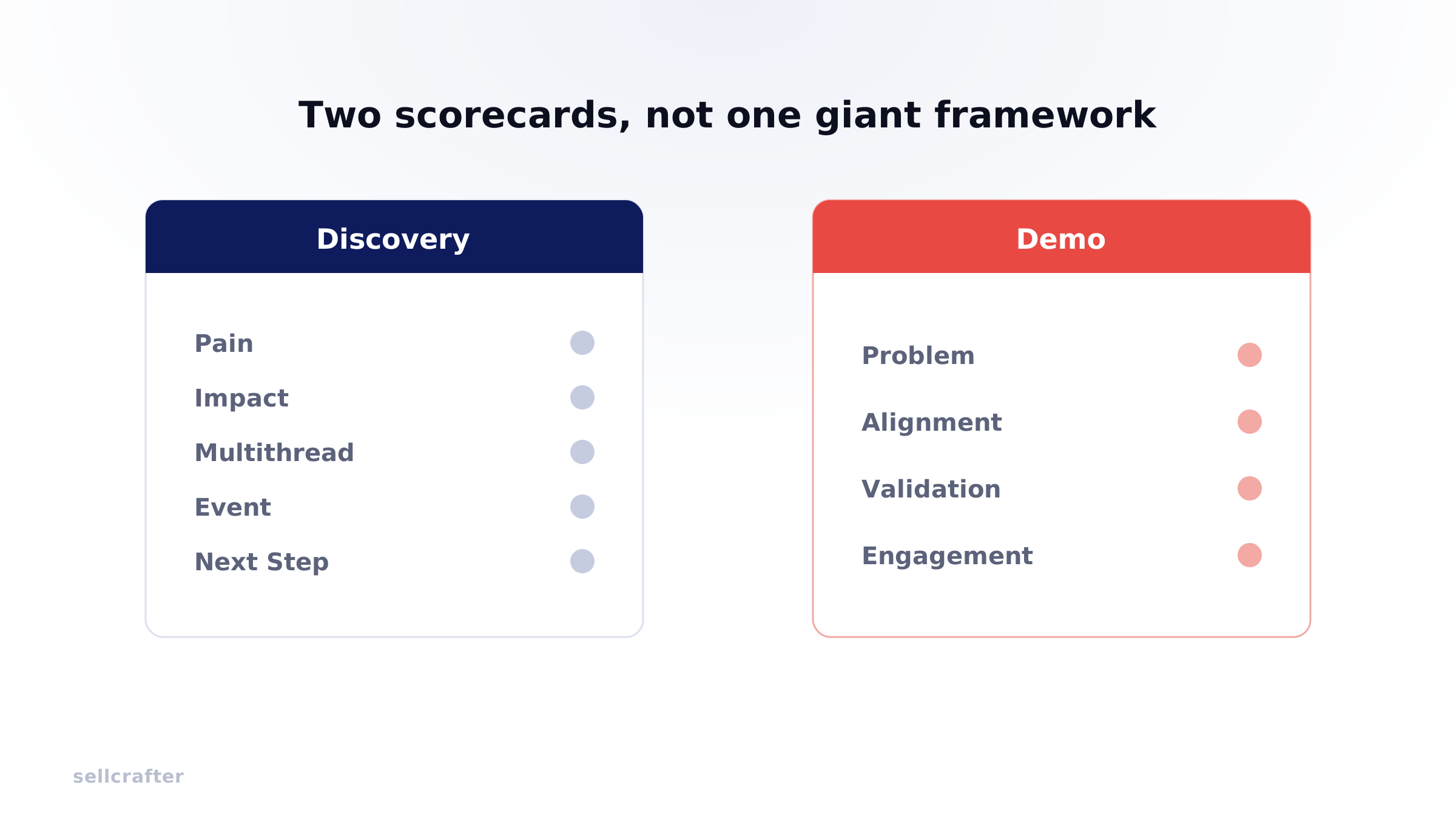
What matters in discovery is not what matters in demo, so use two scorecards instead of one framework stretched across the whole deal.
Reps only hold four or five things in their head per call. A manager scores discovery on one card and demo on the other, and each score points straight at where the deal is weak.
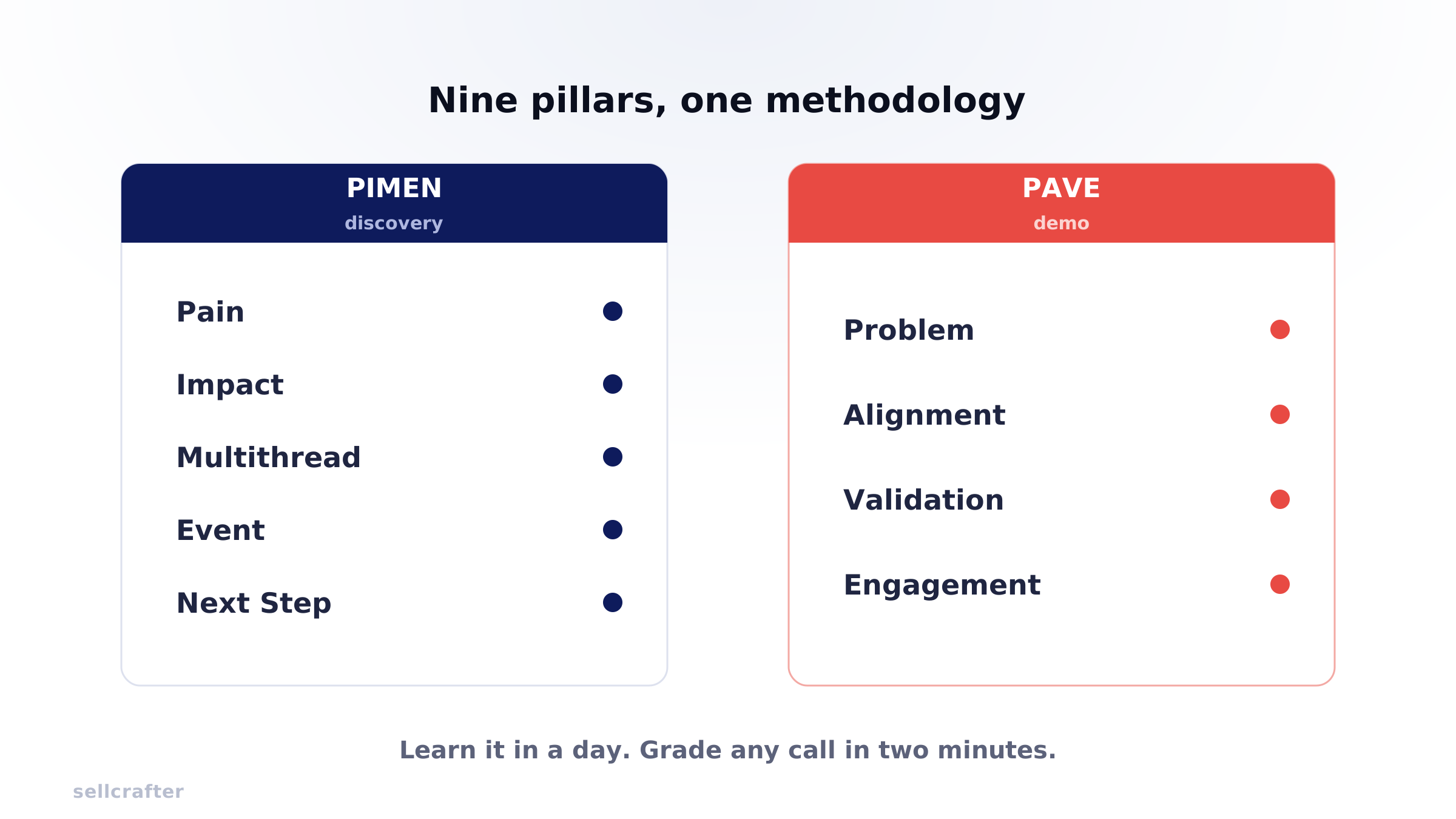
These are the two grids I use, PIMEN for discovery and PAVE for demo.
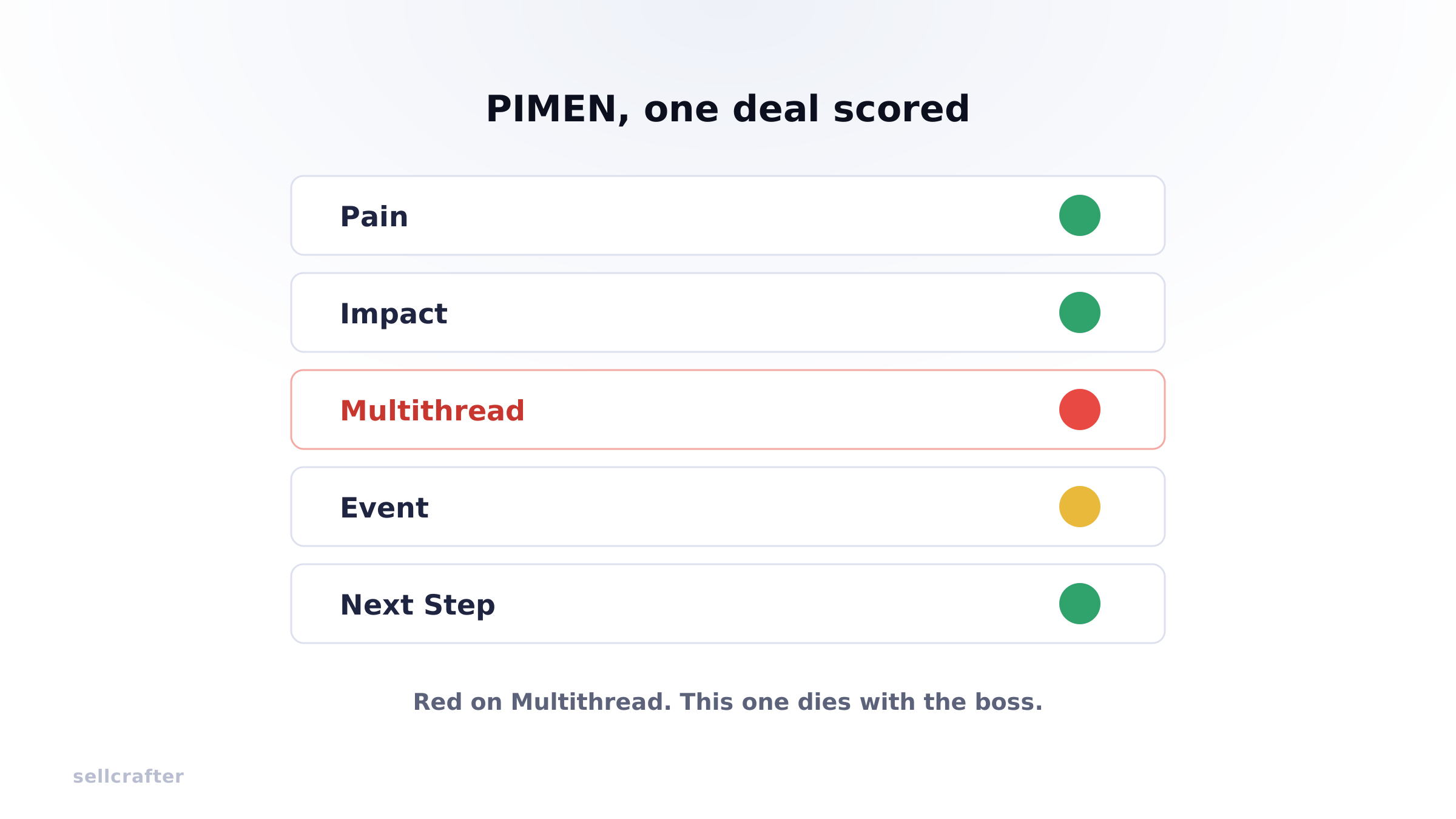
PIMEN, the discovery scorecard. Five pillars.
Pain, stated out loud by the prospect, explicit and not assumed, because when they say the consequence themselves they build their own case for change.
Impact, the pain quantified, which is what replaces the budget conversation: if the problem costs them a large number a year, whether they can afford your solution answers itself.
Multithread, kept to two questions on a non-enterprise deal, who else wants this solved and who might think this is not the right way to solve it, which catches the deals that die in “I need to check with my boss.”
Event, a concrete deadline or trigger, the single most reliable predictor of whether a deal closes on time or slides to next quarter.
Next Step, a specific commitment with a date, named attendees, and an agenda, booked before you hang up.
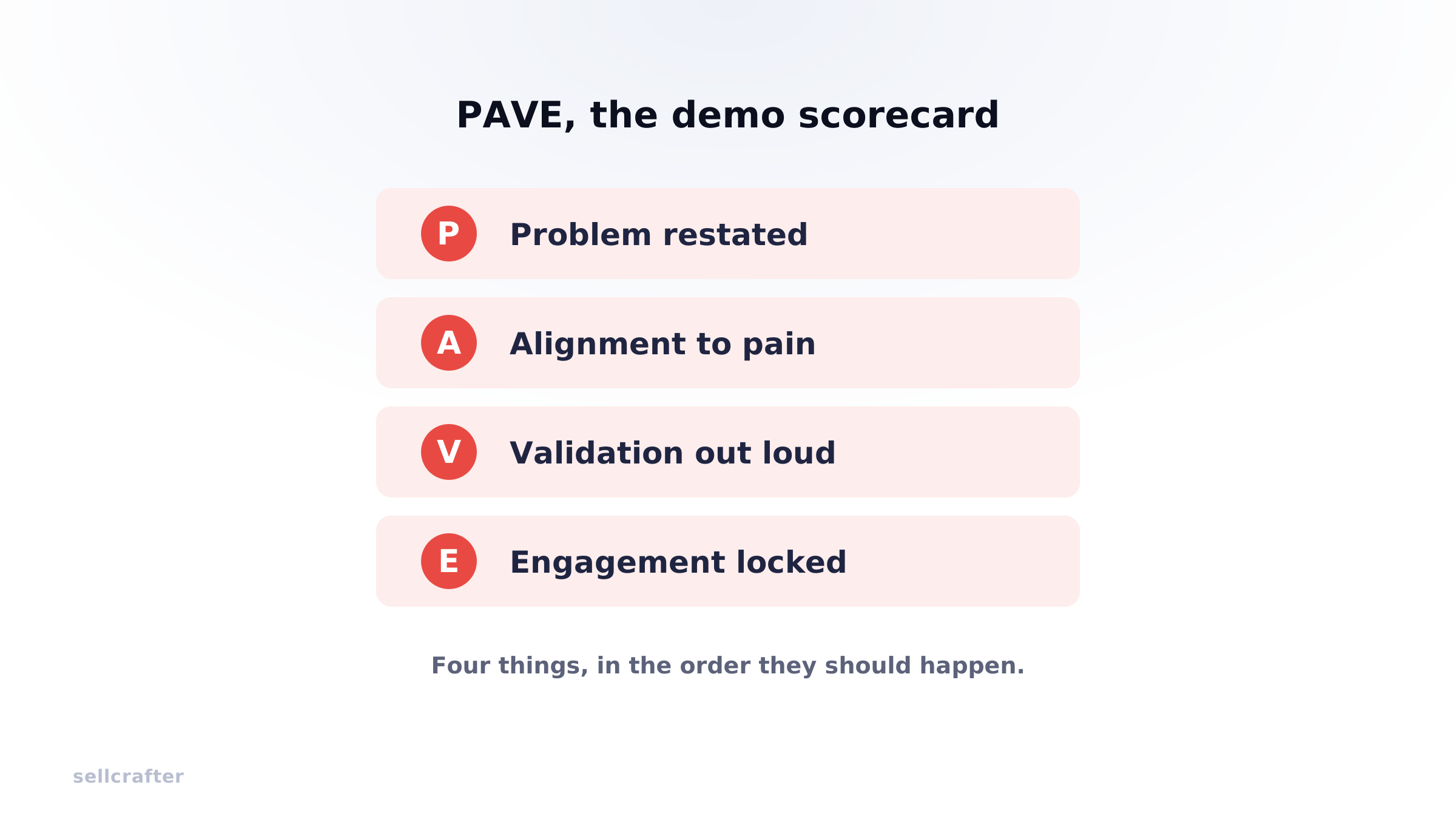
PAVE, the demo scorecard. Four pillars.
Problem restated, replayed from discovery and confirmed before you show a single screen.
Alignment, demoing only what maps to their stated pain, not the full product tour and not last week’s feature.
Validation, making the prospect say it landed, out loud, after each block, plus checking it is the solution they had in mind.
Engagement, locking the next meeting with the people who can block the deal in the room, dated and agenda’d before the call ends.
Installing PIMEN and PAVE and training managers to grade calls with them is work I do directly with SaaS teams. If you would rather not roll it out alone, book a call and we will scope it.
How a leader inspects this
This is where the methodology earns its place.
After each discovery call, score the five PIMEN pillars green, yellow, or red. After each demo, score the four PAVE pillars the same way. Then open the pipeline and read the color.
A deal green across discovery but red on Validation means the demo did not land, so score the call and coach the gap on demo technique.
Green everywhere but red on Event means it will stall, so coach urgency. Red on Multithread means one person going dark ends the deal.
The scorecard also tells you whether the problem is the rep or the process.
If one rep is consistently red on Multithread, that is a coaching issue. If every rep is red on Multithread, that is a process issue and your playbook is not teaching it well enough.
The wrong diagnosis leads to the wrong fix, and the color tells you which one you are looking at.
The Pain pillar is the same situation-versus-problem line as the discovery dig your team already practices in coaching, sitting inside the scorecard.
The one decision
An enterprise methodology that does not fit and no methodology at all lead to the same place: you cannot see why deals are dying.
The decision is whether to install a standard light enough that a rep learns it in a day and specific enough that a manager can grade any call in two minutes.
Two scorecards, nine pillars, no six-month rollout, no certification. Discovery is PIMEN. Demo is PAVE.
I’m Carla. I build sales enablement systems for B2B SaaS teams from zero and hand them off. If you want PIMEN and PAVE installed and your managers trained to grade every call in two minutes, let’s talk.
FAQ
Is MEDDPICC bad? No, it is built for enterprise deals with existing buyer commitment and long cycles. On a non-enterprise motion it is too heavy and adoption fails.
What is the difference between a sales methodology and a sales process? The process is the stages of the deal. The methodology is the standard you grade each stage against.
Can I run PIMEN and PAVE without any software? Yes. A whiteboard or a spreadsheet works. The methodology is what matters, scored consistently after every call.
How long does it take a team to adopt this? A rep can learn it in a day. There is no certification and no multi-month rollout.
Written by
Carla Macciocu
Sales enablement consultant working with B2B SaaS teams from Seed to Series C. Runs Pimp My Playbook out of Sellcrafter.