How to build a sales playbook (and keep it alive)
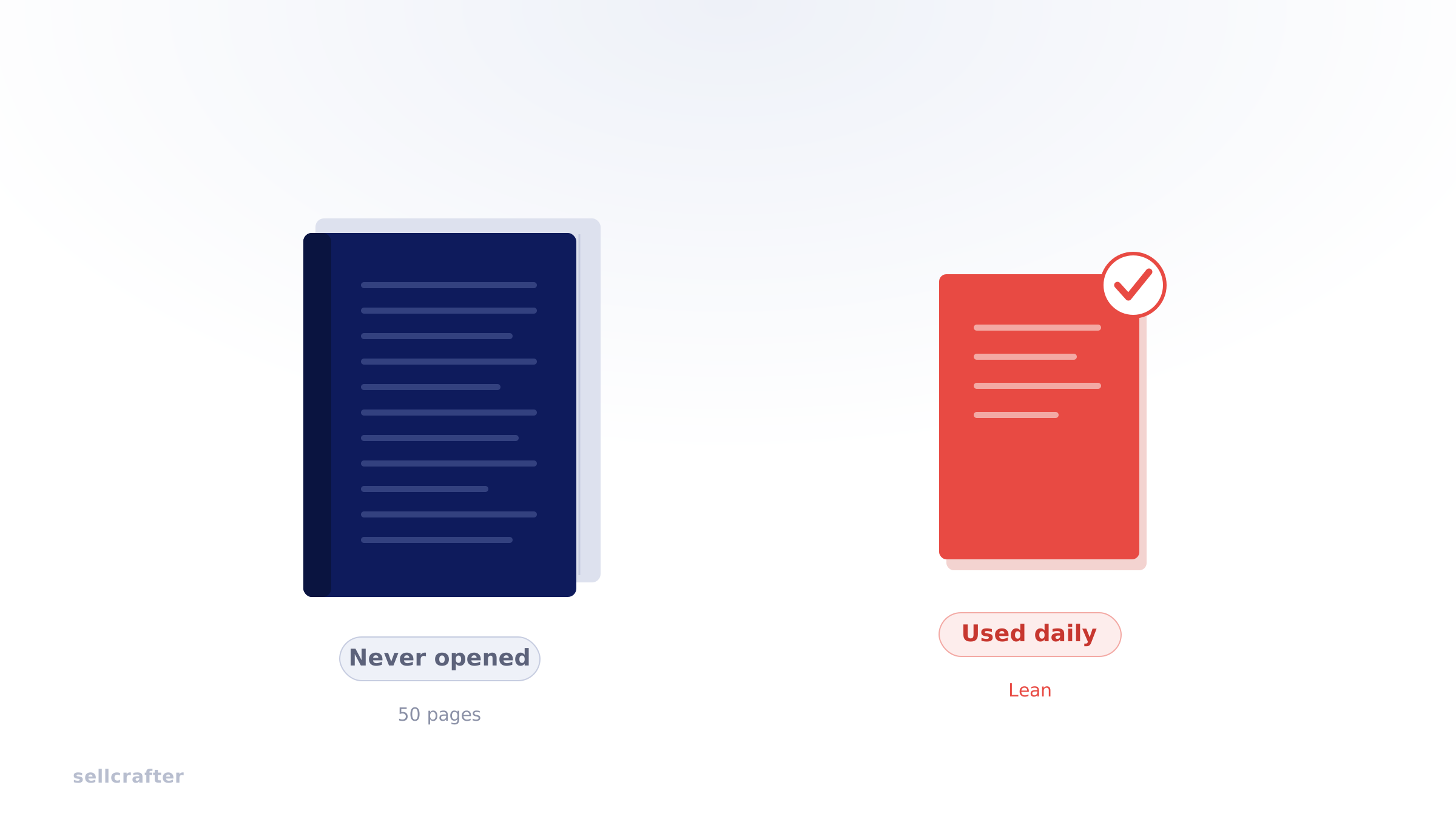
Most sales playbooks are fifty pages nobody opens. Here's how a leader builds one lean enough to use on day one, and keeps it fed by what happens on real calls.
Carla Macciocu
Sellcrafter
Plenty of teams spend six months building the perfect sales playbook. Fifty pages, beautifully formatted, every objection covered, every feature described. Then nobody reads it and nobody uses it.
If nobody is using your playbook, you do not have one. A playbook exists so ten reps run the same motion instead of ten people improvising ten different ones.
This is how to build one lean enough that a new rep can pick it up on day one and know what to do on their next call, and how to keep it alive once it exists.
What a sales playbook actually is
A sales playbook is the written standard for how selling works at your company, short enough that reps follow it. It is not a company encyclopedia and not a thesis on methodology. It answers one question for the rep: what do I do on my next call.
The test is simple. Could a new rep pick this up on day one and know what to do? If the answer is no, it is too long, and length is the most common reason playbooks go unused.
We were all trained in school to add more words and more pages for a better grade. In the field, the opposite is true, because past a certain length adoption drops to zero.
Why most playbooks fail
The first failure is length, and it is fatal on its own. A playbook nobody finishes is a playbook nobody applies.
The second is confusing situations with problems in the discovery guidance, which teaches reps to pitch to a fact instead of a consequence. “They use an outdated CRM” is a situation. What it costs them, how they handle it today, and why it has not been fixed is the problem. If the playbook does not draw that line, reps will not either.
The third, and the one that quietly kills every playbook eventually, is that it gets written once and then sits there. The market changes, new objections appear, a competitor ships something, a rep finds a play that beats anything in the document. The playbook knows none of it. It drifts from reality, slowly and then quickly, reps stop trusting it, they go back to doing what feels right, and you are back to everyone selling differently.
What goes in it
Build it around three parts: what to know, what to say, what to send.
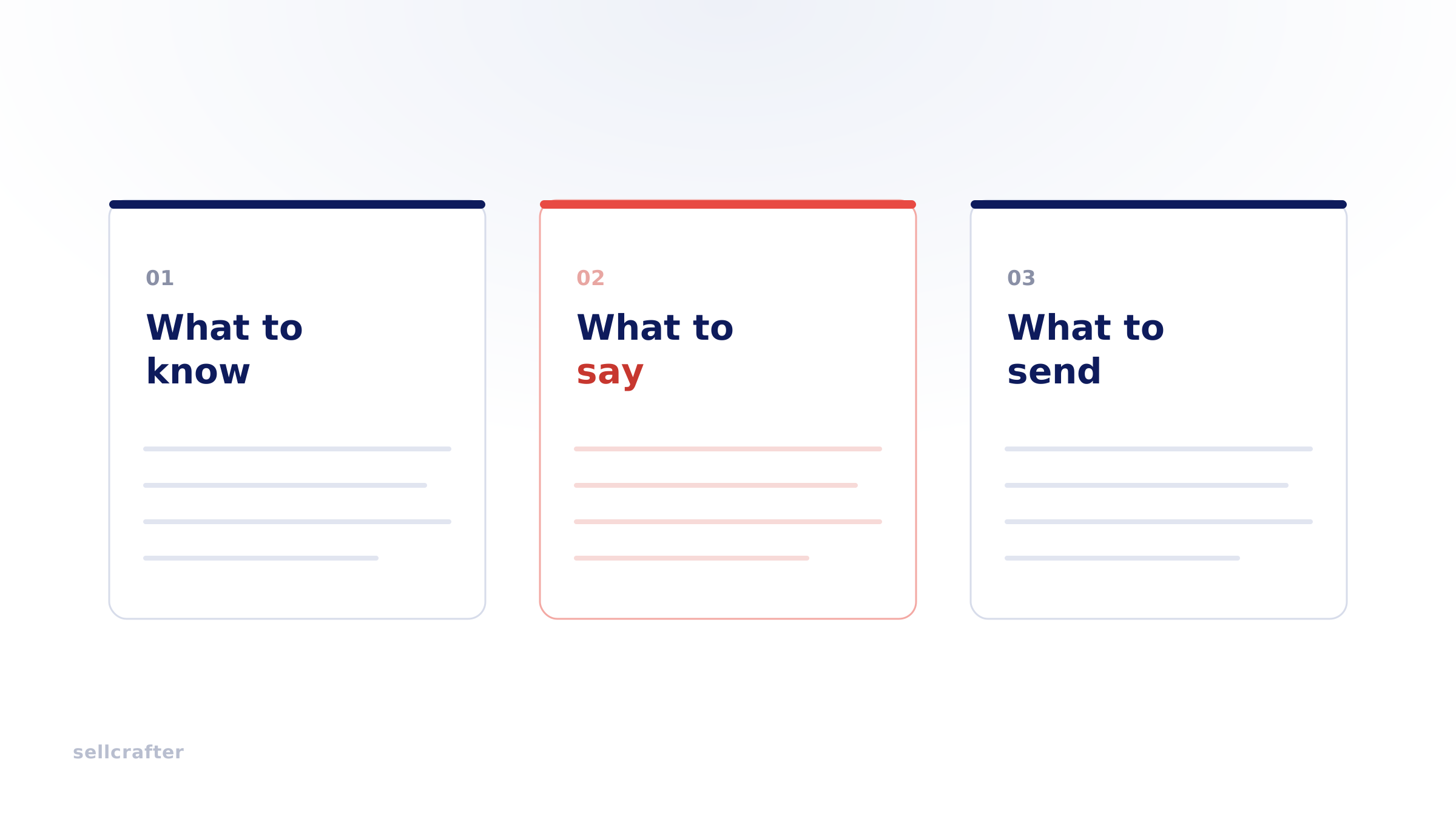
What to know. The fundamentals of selling at your company, and five pieces are enough.
The ICP, specific to the point of discomfort: industry, company size, funding stage, geography, and the triggers that make them ready to buy now. If your ICP starts with “every company doing X”, it needs work.
The unique value proposition in one sentence: what you do, for whom, the outcome, and against what alternative, plus three or four real differentiators.
The pains, written as problems with consequences, not situations.
The people, because companies do not buy, people do: their role, their objectives, and how the pain hits them personally.
And your sales methodology and process, kept simple. For a non-enterprise team, use a methodology that fits a non-enterprise team rather than an enterprise framework that will never get adopted.
What to say. The section that turns theory into practice.
Not scripts on a slide, the real things that work: the emails that get replies, the messages that book meetings, the questions that make a prospect actually talk instead of giving one-word answers, the objections reps really hear and the reason behind them, and your competitive positioning against each specific competitor, what to say and what to leave alone.
What to send. Where most teams waste the most, sending either a twenty-one-slide deck nobody reads or nothing useful at all. Two assets earn their place.
A one-pager the prospect can read in two minutes and forward internally, covering their situation and problems, why to solve it, why now, who needs to be involved, and the next step.
A short personalized deck built around this specific prospect: their problem, the consequence of not solving it, how you solve it, the solution, next steps, benefits, price, plus one relevant case study if you have one that matches their situation. Lean, specific, built for them.
How a leader keeps it alive
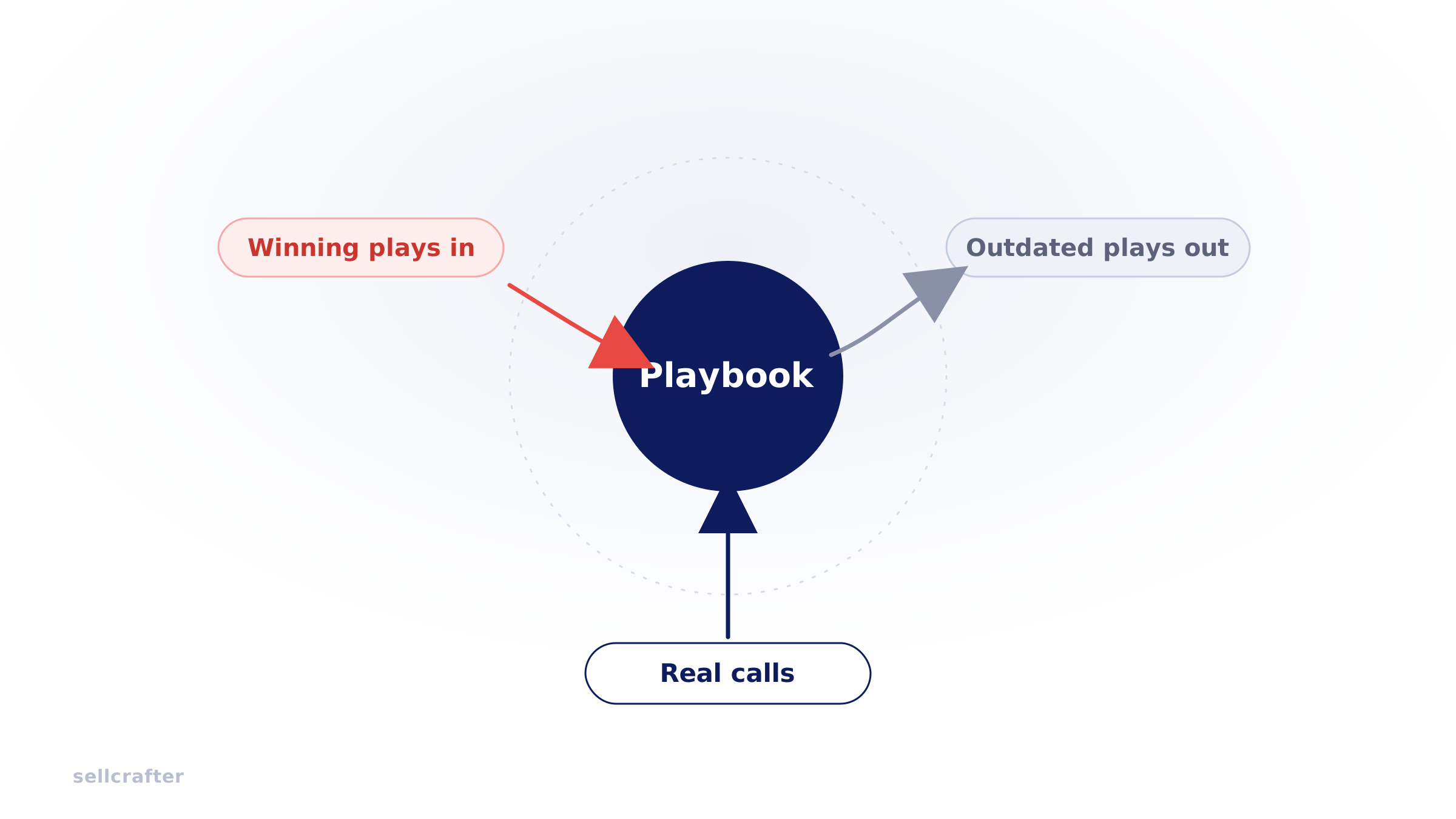
Building the playbook is the easy half. Keeping it true to what is happening on real calls is the half that decides whether it survives.
Set a feedback loop: winning plays from real deals get added, outdated ones get removed, and new objections get logged as reps hear them.
Inspect it the same way you inspect anything. In deal reviews, is the playbook’s language showing up in how reps frame problems, or are they freelancing? When a rep wins with a play that is not in the document, does it get captured, or lost?
If your objection list has not changed in six months, it is already behind the objections your team is hearing today. A playbook should get better because of what happens on real calls, not in spite of it.
The one decision
A static, fifty-page playbook and no playbook end up in the same place: every rep selling their own way.
The decision is whether to build a lean standard your team actually runs and keep it fed by real deals, or keep producing documents that look thorough and get ignored.
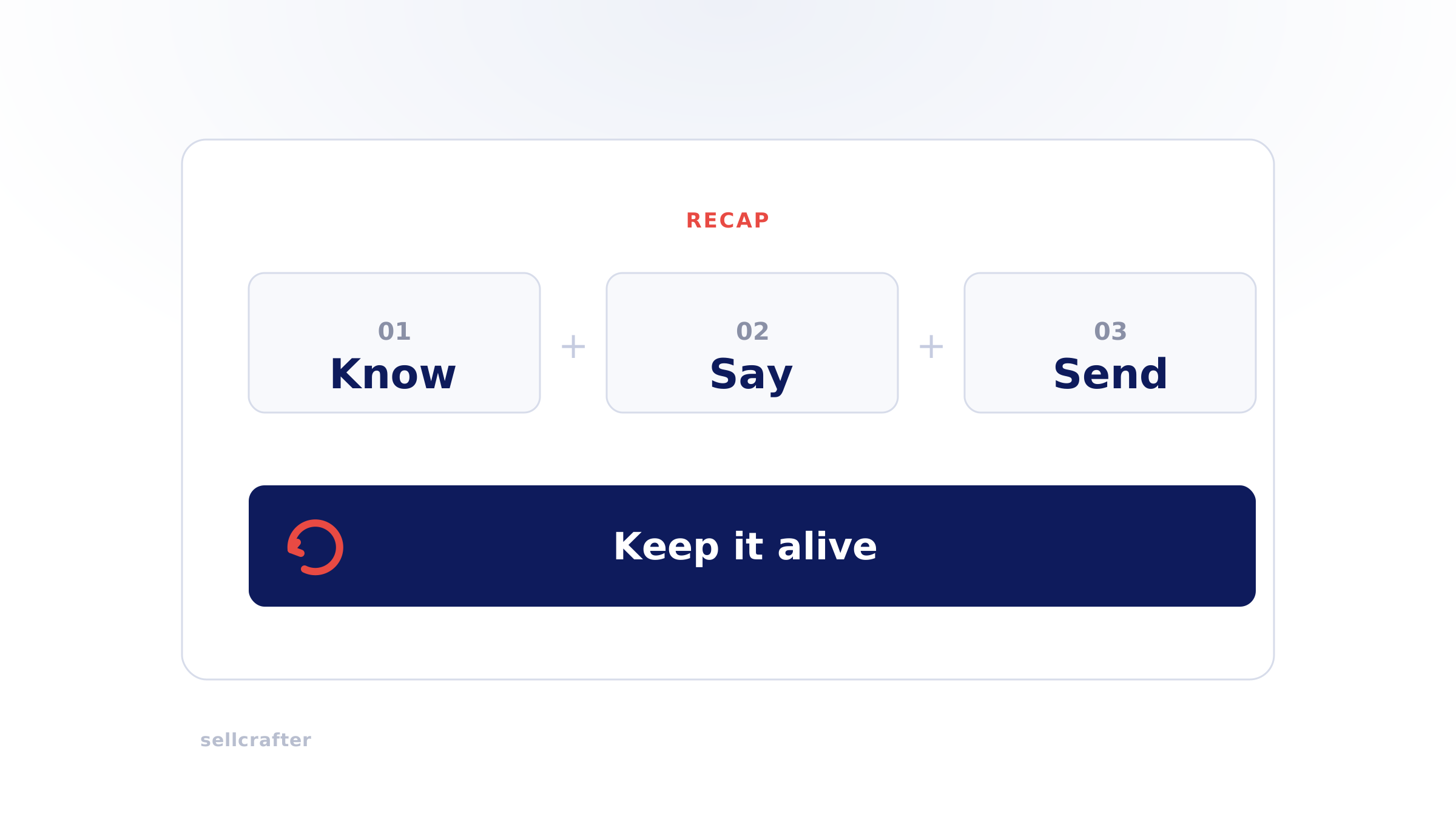
Build it around what a rep needs to know, say, and send. Keep it short enough to use. Keep it fed by real calls.
If you want a playbook built from scratch and handed to your team ready to run, book a call.
FAQ
How long should a sales playbook be? Short enough that a new rep can pick it up on day one and act on it. If they cannot, cut it.
What is the difference between a sales playbook and a sales methodology? The methodology is the set of principles you sell by. The process is the stages from first contact to close. The playbook is the practical document that tells a rep what to know, say, and send at each stage.
How often should we update the playbook? Continuously, from real calls. Winning plays in, outdated plays out, new objections logged as they appear.
Who owns the playbook? The leader who installs the standard owns it, with reps feeding plays up from the field. It improves from the top and the field at the same time.
Written by
Carla Macciocu
Sales enablement consultant working with B2B SaaS teams from Seed to Series C. Runs Pimp My Playbook out of Sellcrafter.