Do You Need a Sales Enablement Manager? A Leader's Decision Guide
I read 100 sales enablement manager job ads. What the role actually covers, the results to expect, and how to decide if you need a full-time hire.
Carla Macciocu
Sellcrafter
Someone on your leadership team has said it by now: “we should hire a sales enablement manager.”
Ramp is slow. Every rep runs deals their own way. The playbook question keeps coming back.
So you open a few job ads to see what the role looks like, and each one reads like four departments were each allowed to write one paragraph.
I read more than a hundred of these ads before writing this: Figma, Coupa, Revolut, Alan, and a long list of names you would recognize.
This article covers what the role actually is, the results you should expect from it, and how to decide whether you need it as a full-time seat on your payroll. By the end you will be able to make that call with a clear head instead of a LinkedIn tab.
What a sales enablement manager actually is
A sales enablement manager is five different jobs, hired into one person, on one salary. That sentence explains most of what follows, including why the role is so hard to fill.
Here are the five, as those hundred ads consistently describe them.
Project manager. The spine of the role. Product moves, messaging moves, process moves, and someone has to hold a single source of truth that stays current. If they cannot project-manage, none of the rest holds together.
Content creator. They turn all of that into something a rep can learn from: onboarding, e-learning, certifications, the flashcards a new hire runs in week one. The hard part is compression.
Data analyst. They read what is actually happening on the team and answer one question out of your CRM and your call recordings: is the process broken, or is it the person? That single call decides everything they build next.
Sales coach. They take what the data told them and fix it with people. Sitting on a call and hearing exactly what went wrong is a real skill, and a rare one. This is the job the weaker hires cannot do.
Solution and AI expert. The newest addition, showing up across ads in the last year or so. Know the product deeply enough to teach it, and use AI to build faster and keep everything current.
I break down each of the five in more depth in when fractional enablement beats a full-time hire. For this decision, what matters is the count: five separate professionals, one requisition.
Why these hires disappoint
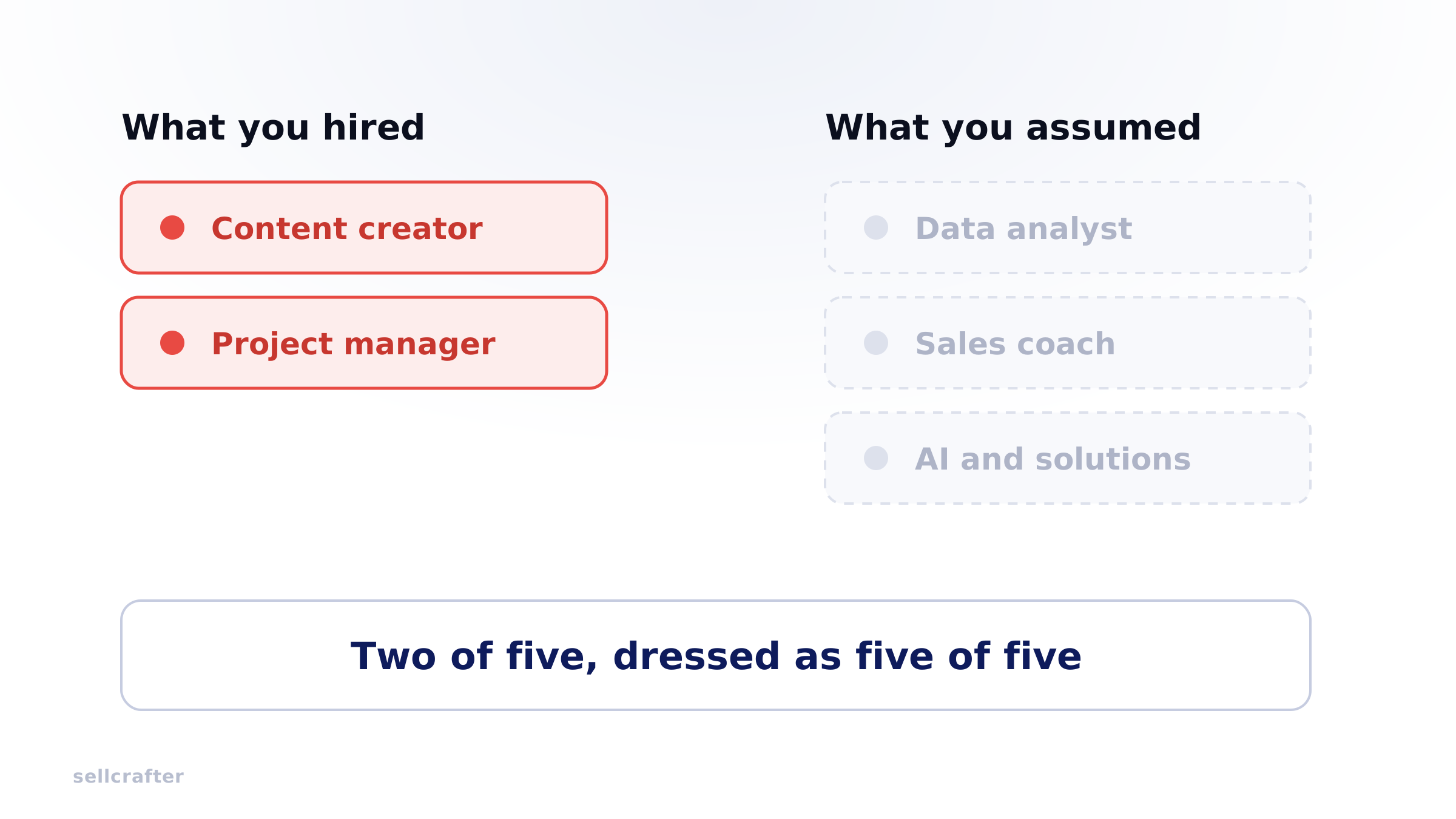
The pattern behind most disappointing enablement hires is simple. A company finds a candidate strong on two of the five jobs and assumes the other three come included.
They do not.
The brilliant content creator usually cannot coach a call to save their life. The natural coach usually cannot build the system that makes their coaching scale beyond the reps they personally sit with.
And the job ads make it worse. When an ad says “fast learner with excellent communication skills,” what it usually means is we could not find all five, so we are hoping.
You can see the gap in behavior, which is the only place it matters.
The team ships a beautiful onboarding program and discovery calls sound exactly like they did before. Or coaching sessions happen every week and the playbook that would spread those fixes across the team never gets built.
Two of five, dressed up as five of five.
The results a leader should expect
If you cannot say what good looks like, you cannot tell whether the hire worked. Every ad I read agreed on the first result, and the rest follow from it. All of them are observable.
New reps get productive faster. The cleanest result. A new hire hitting their number in four months instead of seven, to take an illustrative shape of it. You see this in ramp data, not in a training completion report.
The team starts selling the same way. Same qualification, same discovery questions, same way of building the case for a deal. You hear it in calls.
Your pipeline data starts to mean something. Because deals are graded the same way across reps, your forecast gets more honest. You see it in deal reviews.
Best practice spreads. The thing your top rep does naturally shows up in three other reps a month later, because someone caught it and built it into the system.
The playbook gets opened. On real deals, in real weeks, by people preparing real calls. A playbook last opened sometime in Q2, living in a page nobody bookmarked, is a document, not a system.
One caution: do not expect revenue to move in month one. Judge the hire at month three, on behavior change, using the checklist further down.
How to decide: full-time hire or not
Start with the part that is not in question. You need this work done.
If your deals have any complexity, your product changes fast, or you are hiring sellers on a regular cadence, then the playbook, the onboarding program, the coaching and the single source of truth are not nice-to-haves.
Without them, every rep figures it out alone and your results swing on whoever you happened to hire that quarter. The function is not optional.
The real question is whether you need it as a full-time person on your payroll. Two reasons to slow down before you post the job.
The right person is hard to find. Five jobs in one body, and nobody is a ten out of ten on all five. You will spend months searching and you will probably compromise on two of the five. Decide which two you can live without before you start interviewing, not after.
Speed. If you are growing fast, you usually cannot afford to wait while someone spends six months building your system from scratch while learning your market as they go. You need the system standing in weeks, not quarters.
So the decision looks like this.
If you have the budget and the deal volume to justify a full-time seat, hire one, and hire someone who has built this before so you are not paying for a six-month learning curve.
If you do not have the budget, or you are not ready to commit to the seat yet, bring in a contractor who installs the system fast and keeps it running light, then hands it over to a full-time sales enablement manager when you hire one.
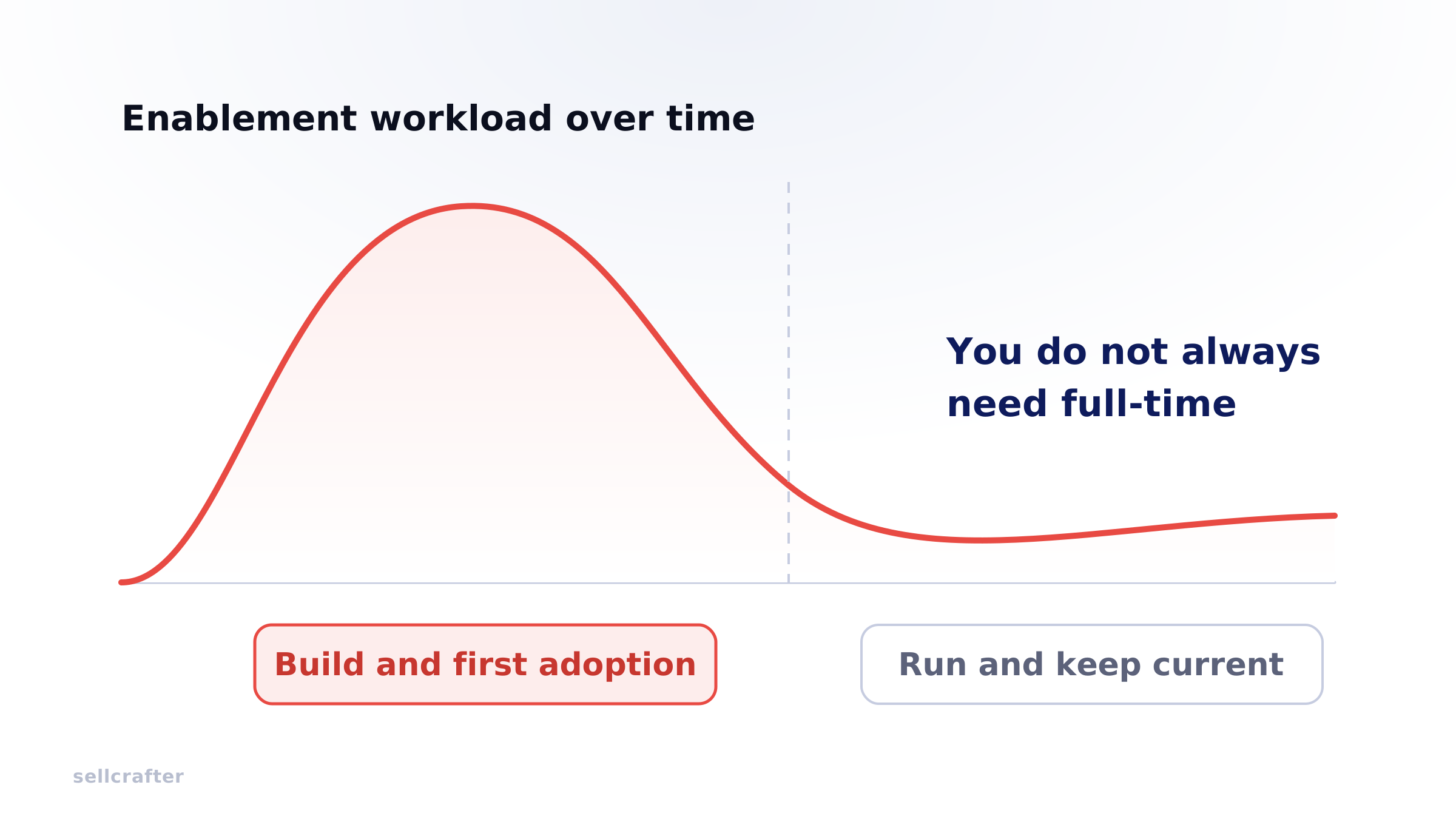
The build phase and the run phase are different workloads, and only the first one is heavy. If you want to start on your own, the sales enablement cookbook walks you through how to document your sales process before anyone is hired to own it.
How to inspect this at month three
Whether you hired full-time or brought in outside help, this is the review. If this section reads like homework, that is because it is.
Listen for in calls:
- Reps run discovery differently than they did in January, and in the same way as each other
- Qualification language is consistent across the team
- The fix from last month’s coaching shows up in this month’s calls
Check in deal reviews:
- Deal stages are graded on the same criteria regardless of who owns the deal
- Next steps are written in the CRM, not carried in someone’s head
- The leaking stage identified in the data has a named fix in the playbook
Red flags:
- The month-three report counts output: “we shipped 12 modules.” Modules are not the product, behavior change is
- Playbook usage is flat while content production is up
- Coaching happens every week and calls sound the same as before
Update in the playbook:
- Every recurring call problem found in this review gets a section, an owner, and a date
If the answers here are good, the hire is working, whatever the revenue line says this early. If they are bad, no amount of shipped content will save month six.
FAQ
What does a sales enablement manager do day to day? They alternate between building and inspecting. Building: playbook sections, onboarding modules, certifications, training assets. Inspecting: call reviews, CRM and pipeline analysis, coaching sessions. A hire who only builds, or only coaches, is doing part of the job.
What is the difference between sales enablement and sales operations? Sales operations owns the machinery: CRM administration, territories, comp, reporting infrastructure. Sales enablement owns how sellers sell: the process, the content, the training, the coaching. They share data and they should talk weekly, and they are different jobs.
When is the right time to bring in sales enablement? Look at motion signals, not headcount. If deals require several stakeholders and a real business case, if your product or pricing changes faster than reps can absorb informally, or if you are hiring sellers on a steady cadence, the informal version has already stopped working. The first visible symptom is usually ramp time.
Can sales enablement be fractional or outsourced? The build phase can, and often should be. Standing up the playbook, the onboarding program and the coaching cadence is a heavy, front-loaded project that benefits from someone who has done it before. The run phase, keeping it current and coached, is where a full-time internal hire earns the seat.
How much of the role can one person realistically cover? Expect strength in two or three of the five, competence in the rest. That is a normal outcome, not a failed hire. The mistake is not naming the gaps in advance, so nobody notices which part of the system never gets built.
The decision in front of you
Leaving enablement to individual rep behavior is a decision too, just an expensive and invisible one: slow ramps, forecasts built on guesswork, and your best rep’s habits retiring with them.
The call you actually have to make is narrower than the job ads suggest. You need the function. You need the five jobs covered.
What you have to decide is whether one full-time person covers them from day one, or whether someone installs the system first and hands it over.
I’m Carla. I build sales enablement systems for B2B SaaS teams, coach the managers to run them, and hand them off.
If you want a straight answer on which side of that line you are on, book a call and we will work out what you actually need.
Written by
Carla Macciocu
Sales enablement consultant working with B2B SaaS teams from Seed to Series C. Runs Pimp My Playbook out of Sellcrafter.